News

January 9, 2024

Concord Hospitality has received investments into its operating company from Whitman Peterson and The Aztec Group, two of Concord’s long-term real-estate partners.

“Concord Hospitality has had the good fortune of partnering with both Whitman Peterson and The Aztec Group for many years,” said Mark Laport, CEO/president, Concord Hospitality. “Over the course of our longstanding relationships, both partners have been instrumental in molding Concord’s strategic direction. It is with great excitement that we announce a continuation of these synchronized partnerships which have already contributed to our successful track record, and our continued growth as a renowned management company and leading developer.”

Commenting on the investment, Wes Whitman, cofounder/comanaging partner, Whitman Peterson, said, “After many years of being strategic and programmatic partners on the real estate side, we are thrilled to further deepen our relationship with Concord through this operating-company investment. In addition to loving the people, who are so capable, so culturally compatible, and such great partners—we believe Concord is one of the most trusted, vertically integrated hospitality platforms in the industry and is well positioned for significant continued growth and success in the coming years.”

Ezra Katz, partner, The Aztec Group, added, “Our association with Concord has continually seen great success and as we embark on this new phase of our relationship, we look forward to leveraging our collective strengths to contribute to Concord’s continued success.”

February 13, 2020

National Multifamily Housing Council (NMHC) Ranks Greystar in Top 10 in Four Categories Including Top Apartment Owners, Top Developers and Top Builders

 Charleston, S.C. (April 17, 2018) – Greystar Real Estate Partners, LLC (“Greystar”), a global leader in the investment, development and management of rental housing properties, is pleased to announce that it has been recognized as the top-ranked apartment manager for the ninth consecutive year in the National Multifamily Housing Council’s 30th annual 2019 NMHC 50, the authoritative ranking of the nation’s 50 largest apartment owners and managers. In all, the company was recognized in four categories including the top owners list, where it ranked seventh – up nine spots from 2018.

 The NMHC has also recognized Greystar as a top-five apartment developer for the last five years, awarding it third in the category for 2019. Moreover, the company remains one of the nation’s top builders, coming in 10th in this year’s ranking.

 “Greystar’s achievements are made possible by our team members’ dedication to providing excellent service to our residents, clients and partners while establishing Greystar as an industry leader in markets across the globe,” said Bob Faith, Founder and CEO of Greystar. “We are thrilled and grateful for the continued recognition from NMHC and look forward to continuing to evolve and advance our strategic priorities in the coming year.”

 NMHC partners with Kingsley Associates, a leading real estate research and consulting firm, for the NMHC 50’s research and analysis. All apartment owners, managers, developers, and contractors are invited to answer a survey questionnaire that asks about their prior year activities. Apartment owners and managers are ranked based on their portfolio holdings (either owned or managed) as of January 1, 2019, while developers and general contractors are ranked based on the number of units started in 2018.

 For more details about the NMHC 50, visit www.nmhc.org/The-NMHC-50.

 About Greystar

Greystar is a leading, fully integrated real estate company offering expertise in investment management, development, and management of rental housing properties globally. Headquartered in Charleston, South Carolina, Greystar manages and operates an estimated $115 billion of real estate in over 180 markets globally including offices throughout the United States, UK, Continental Europe, Latin America, and the Asia-Pacific region. Greystar is the largest operator of apartments in the United States, managing approximately 500,000 units/beds, and has a robust institutional investment management platform with $32 billion of assets under management including $12 billion of assets under development.  Greystar was founded by Bob Faith in 1993 with the intent to become a provider of world-class service in the rental residential real estate business. To learn more, visit www.greystar.com.

 About NMHC

Based in Washington, D.C., the National Multifamily Housing Council (NMHC) is the leadership of the trillion-dollar apartment industry. We bring together the prominent apartment owners, managers and developers who help create thriving communities by providing apartment homes for 39 million Americans. NMHC provides a forum for insight, advocacy and action that enables both members and the communities they help build to thrive. For more information, contact NMHC at 202/974-2300, email the Council at info@nmhc.org, or visit NMHC’s web site at www.nmhc.org.

 About Kingsley Associates

Since 1985, real estate leaders have turned to Kingsley Associates to maximize their portfolio and organizational performance. Our comprehensive suite of research and benchmarking tools assess firm performance and competitive position based on direct feedback from key stakeholders. Kingsley’s primary services include resident and tenant experience surveys, employee engagement studies, client /investor experience surveys, and peer benchmarking programs. In response to the need for performance-based benchmarks, Kingsley Associates developed the Kingsley IndexSM, which is now the largest and most comprehensive database of customer satisfaction metrics available to the real estate industry. To learn more, please visit our website kingsleyassociates.com or email at kainfo@kingsleyassociates.com.

 Media Contact:

Megan Kivlehan

ICR on behalf of Greystar

Megan.Kivlehan@icrinc.com

September 27, 2019

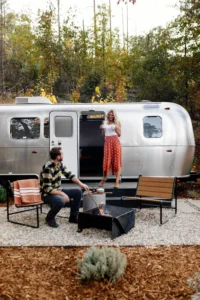
Polished to a mirror sheen and reeking of nostalgia, the Airstream camper has enjoyed a renaissance in recent years as food truck operators, Airbnb landlords and others have embraced the classic American brand. Now a San Francisco-based company called AutoCamp has raised $115 million to build a nationwide network of hotels fashioned from the trailers.

AutoCamp announced a deal with manufacturer Thor Industries Inc. in December to become the exclusive developer of Airstream hotels, and will use the new capital to buy land and customized trailers to open new sites, Chief Executive Officer Neil Dipaola said in an interview. The fundraising deal, led by real estate private equity firm Whitman Peterson, includes a follow-on provision that could double the investment and allow AutoCamp to expand to 20 new markets.

“We want to build an authentic American outdoor experience with the consistent quality and comfort you expect from boutique hotel,” Dipaola said.

Dipaola and cofounder Ryan Miller launched AutoCamp in 2013 with six refurbished trailers on a site near downtown Santa Barbara, California. They opened a second, larger, property in Sonoma County wine country in 2016, and started laying plans to open new sites within driving distance of the largest U.S. metropolitan areas.

Dipaola said AutoCamp is different from “glamping,” a portmanteau of glamor and camping that often approximates to five-star service in a tent, because his company’s trailers are heated for winter stays, giving them four-season appeal, and making them more similar to a traditional hotel than a platform tent.

Still, the business model combines some high-end touches with a do-it-yourself ethos. The company’s third site, near the entrance of Yosemite National Park, is slated to open later this year with 80 Airstream trailers with custom hardwood floors and marbled bathrooms – and room rates that can reach almost $500 a night during peak season. And that’s with no daily housekeeping and no bellhops on hand to help with the luggage.

“We provide iconic red Radio Flyer wagons and you pile your bags in those,” said Dipaola. “There’s fantastic, fresh-squeezed orange juice, but in true AutoCamp fashion, you have to squeeze it yourself.”

August 22, 2019

If your ideal camping trip skews more Troop Beverly Hills than Into the Wild, the glamping experience of AutoCamp may be for you. With locations in sunny California—including Santa Barbara, the Russian River and, most recently, Yosemite—AutoCamp’s campsites have boutique-hotel comforts, parceled into luxe Airstream trailers, cabins and tents. There are shuttle services and guided hikes for those who want to get in touch with nature, but those who don’t want to hit the trails can enjoy the site’s amenities like fire pits, heated pools, sundecks and live music. —Cady Lang

Correction, Sept. 4

The original version of this story misstated the location of Autocamp’s Yosemite-area campsite. It is located in Midpines, California, not in Yosemite itself.

June 27, 2019

Dwell has long been a fan of the iconic Airstream—some call it a mild obsession. So when AutoCamp reached out to give us a first look at their newest property, we hit the road for the three-hour journey from San Francisco to seek enlightenment at one of America’s most beloved national parks: Yosemite.

Yosemite is hot—in temperature (my gum melted in my purse on our drive up) and in trend (you’ll be hard-pressed to find a Californian who hasn’t visited)—so it came as no surprise that AutoCamp chose this area for the third installment of their wildly popular outdoor hotels comprising decked-out Airstream suites, luxury tents, and cabins.

View Photos

Dan Weber of Anacapa Architecture said that the design for the clubhouse was inspired by the work of Richard Neutra, and by Mies van der Rohe’s Barcelona Pavilion.

Photo by Erin FeinblattPhoto Categories: outdoor, concrete fences, walls, grass, wood fences, walls, garden, walkways, trees, horizontal fences, walls

Get the Dwell Travel Newsletter

Start exploring far-flung design destinations, the newest boutique hotels, and well-designed bars and restaurants perfect for the modern jetsetter.

AutoCamp’s design has a personal, familial vibe throughout the site, which is exactly what you want in a space like this. I have many fond memories of camping near the Sierras as a kid—swimming in a lake down the road from my family’s campsite, buying ice cream and hot dogs at the cafe by the canoes, hiking up dusty trails under a canopy of pines—and if there was ever a perfect, grown-up version of the motor lodges and tents I stayed in, this would be it.

View Photos

Heating and cooling are essential for Yosemite’s snowy winters and broiling summers. Glass walls along all sides of the clubhouse fold away to let air in—or slide shut to insulate the space from the temperature outside.

From start to finish, AutoCamp Yosemite took a surprisingly short two years to complete. That’s because they used the same dream team they worked with for their Russian River location—Anacapa Architecture and Geremia Design. Building on the desire to make the space homey and authentic, they took inspiration from the area and brought in local talent and hometown favorites every chance they got. Architect Dan Weber sourced the tents from a company based in his hometown; local designers contributed much of the site’s wall art, decor, and building fabrication; and a vast majority of the furnishings and decor were designed or sourced from the designers’ friends.

View Photos

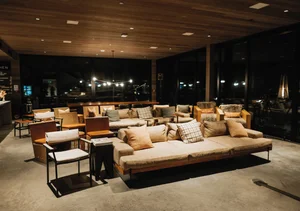
The clubhouse’s palette of cool concrete, pine, and steel makes rustic refined. The assortment of seating in the clubhouse’s main area allows guests to occupy every space, but it still feels intimate with one or two people.

Photo by Aaron LeitzPhoto Categories: living room, sofa, concrete floors, recessed lighting, chair, coffee tables, rug floors

You can feel the earnestness and hard work tucked into every corner of the new space. It took many hands to create, and the payoff is like something out of a dream: AutoCamp is where great design meets the great outdoors.

View Photos

In the reception area, Geremia Design called upon Chambers Art & Design to co-design and engineer a stretched fabric screen depicting Yosemite’s Half Dome. The pendant lighting is by Workstead.

Photo by Aaron LeitzPhoto Categories: hallway, concrete floors

Upon checking in, we were given a tour of the grounds, which once hosted a Kampgrounds of America location. The site proved to be both a design challenge—how best to redesign the existing pool?—and a blessing in disguise. AutoCamp Yosemite was able to open to the public faster than expected because all the permits from the previous campsite were already in place.

View Photos

Geremia Design worked with lighting designer Rosie Li to engineer and fabricate a large-scale map installation inspired by elevation markers. Light bulbs pinpoint nine summits and points of interest across the Yosemite Valley. Bay Area–based artist Avila Rose Signs used silver lead to hand-paint the Merced River running through the map; the lines glint in the afternoon sun.

Photo by Aaron LeitzPhoto Categories: hallway, concrete floors

View Photos

The site already had a pool when Anacapa Architecture began planning the design of the clubhouse. To merge the two structures more organically, the architects introduced stadium-like seating that descends from the clubhouse’s second-floor deck down to the pool area.

Photo by Erin FeinblattPhoto Categories: outdoor, swimming pools, tubs, showers, back yard, wood patio, porch, deck, trees, concrete fences, walls, concrete patio, porch, deck, horizontal fences, walls

“AutoCamp’s mission is to connect people with the outdoors and each other, and AutoCamp Yosemite represents a landmark moment for our team, the local community, and for travelers that are looking for new and unique ways to experience the outdoors.” —AutoCamp founder and CEO Neil Dipaola

View Photos

The patio invites dining alfresco under a neon sign custom-created for AutoCamp.

Photo by Erin FeinblattPhoto Categories: outdoor, wood patio, porch, deck, horizontal fences, walls, shrubs, wood fences, walls, side yard, trees

View Photos

The clubhouse positively glows during golden hour.

Photo by Erin FeinblattPhoto Categories: exterior, flat roofline, glass siding material, concrete siding material, wood siding material

View Photos

This section of AutoCamp Yosemite was built upon a former trailer park, so there was minimal site disturbance. Another section of more secluded suites lie on the other side of the pond.

Photo by Erin FeinblattPhoto Categories: outdoor, trees, walkways

In total, the accommodations include 80 deluxe Airstream trailers, 15 luxury tents, three cabin suites, and five ADA suites. Working in tandem, Dan Weber of Anacapa Architecture and Ryan Miller of AutoCamp designed the Airstream suites, each of which was assembled over the course of three days in Airstream’s factory in Ohio.

View Photos

Custom-made moon sculptures by New York–based artist Bronsen hang prominently in each Airstream. The decorative pillows are by Treko.

Photo by Aaron LeitzPhoto Categories: living room, ottomans, recessed lighting, sofa, dark hardwood floors

The Dwell team was lucky enough to snag some Airstream suites sitting across the natural pond from the clubhouse. We were more than a little impressed by the interiors: a walk-in shower? Cool ceramics in the cupboards? We all agreed that the mattresses felt like sleeping on clouds after a long day in the heat.

What I liked best was that the interior design is aspirational, but not inaccessible. Every item is labelled (I now am in desperate want of Malin+Goetz shampoo for my own apartment), and staff are happy to give you more information. The “camp store” near the reception area is filled with mugs, Ursa Major face wipes, artisanal sodas, and other tchotchkes stocked in the suites.

View Photos

The bathrooms in the Airstream suites fit a lot of great design into a small space.

Photo by Aaron LeitzPhoto Categories: bath room, wall lighting, marble walls, two piece toilets, recessed lighting, porcelain tile floors, wall mount sinks

View Photos

Eric Trine of Amigo Modern designed the lounge chairs outside the tents. The fire pits are by Stahl.

Photo by Aaron LeitzPhoto Categories: bedroom, chair, concrete floors, bed, table lighting, night stands

View Photos

Tent suites are similar in tone to the Airstreams, but offer a more outdoorsy glamping experience. The central pendant light is by In Common With.

Photo: Mike ChinoPhoto Categories: bedroom, rug floors, bench, shelves, dark hardwood floors, bed, night stands, ceiling lighting

View Photos

A peek inside one of the site’s five ADA-accessible “X Suites.” The 275-square-foot units were designed by M-Rad and maximize every inch of space.

Photo Courtesy of AutocampPhoto Categories: kitchen, recessed lighting, medium hardwood floors, ceramic tile backsplashes, undermount sinks, subway tile backsplashes, granite counters, wood cabinets

View Photos

The X Suites’ bedrooms all have ceiling-height windows that look out onto the grounds. The blanket is by Coyuchi.

Photo by Natasha SadikinPhoto Categories: bedroom, rug floors, recessed lighting, bed, night stands, wall lighting, dark hardwood floors

View Photos

The cabins are holdovers from when the site used to be a KOA; Geremia Design renewed the interiors.

Photo by Natasha SadikinPhoto Categories: living room, sofa, table, wall lighting, coffee tables, concrete floors, ceiling lighting

View Photos

A look across the pond to the clubhouse. At night, guests huddle around the fire pit and swap stories about their day in the park.

Photo by Erin FeinblattPhoto Categories: exterior, house building type, flat roofline, glass siding material, wood siding material

View Photos

Our airstream suites looked out onto the natural pond at the center of the grounds. At night, most guest light up their fire pits to roast marshmallows and relax.

Photo by Erin FeinblattPhoto Categories: exterior, airstream building type, metal siding material, metal roof material

Reaching the park is easier than you think. AutoCamp is located just outside the charming town of Mariposa, and it’s a 45-minute drive into Yosemite (a typical trek from most hotels and lodges that aren’t the park itself). Once in the national park, we took a short hike—it was absolutely gorgeous, and the small entrance fee was more than accounted for by the priceless experience of breathing fresh air and being immersed in a landscape of waterfalls, boulders, and trees.

View Photos

The Dwell team took a hike up to a few waterfalls—talk about a view!

Photo: Mike ChinoPhoto Categories: outdoor, woodland, trees, boulders

AutoCamp Yosemite is now open for reservations.

Related Reading: 

AutoCamp’s Modern Clubhouse Emerges from the Russian River Redwoods

AutoCamp Santa Barbara

Project Credits:

Architect: Dan Weber, Anacapa Architecture / @anacapa_architecture

Project Managers: Jessi Finnicum-Schwartz, Geoff April

Design Team: Jose Sanchez, Saba Zahedi

Interior Design: Geremia Design / @geremia_design

X Suites Design: M-Rad

General Contractor: Quiring

Structural Engineer: Ashley & Vance Engineering

Civil Engineer: RRM Design Group

Electrical Engineer: JMPE Electrical Engineering

February 6, 2019

Outdoor lodging brand AutoCamp recently raised $115 million through a partnership with real estate private equity firm Whitman Peterson to open a nationwide network of hotels created from Airstream camper trailers manufactured by Thor Industries Inc. The firm plans to use the money to buy the land for the sites and customize the trailers. The agreement with Whitman Peterson includes a provision for potential expansion funding of another $115 million in the future.

In the developers’ vision, this new hotel network, built around the recently emerged concept of “glamping,” will combine a full-luxury hotel experience with high-end trailers in a natural environment, with all the attractions of camping without any of the fuss.

At the moment, demand for innovative travel experiences is trending high, according to Peter Nichols, national director of the hospitality group with real estate services firm Marcus & Millichap. “We don’t think glamping is going away. It’s a major segment of the hotel market now.”

The projected compound annual growth rate (CAGR) for this segment of the hospitality market is 14 percent, according to Nichols. He notes this major shift in the hospitality industry is connected to baby boomers retiring with money to spend and desires to do “more than a trip to Disneyworld,” a kind of travel experience to “complement the non-materialistic mindset of millennials” as well, who make up a large portion of glampers.
Many alternative hotel chains are creating “experiential” stays with nature experiences at their core to “connect people to the great outdoors in a way a traditional building can’t,” says Julie Purnell, managing director with real estate services firm CBRE.
Citing luxury camping experience provider Under Canvas as a notable long-time player in the market, she notes that existing service providers in the space tend to be more seasonal due to their vulnerability to unforeseen weather conditions, while AutoCamp can offer “a different experience because you have luxury offerings and amenities regardless of a changing environment.”

Research points to AutoCamp as having an advantage in the space because “it’s a quicker speed to market,” Purnell says. “The price point is lower, there’s little overhead as [compared to] a traditional hotel, and overall more resistant to market fluctuations. You can also offer cheaper options for travelers who are in a tighter economic situation, a greater alternative to a four-star hotel.”

In a Q&A with NREI, AutoCamp Founder and CEO Neil Dipaola talks in detail about the origins and future plans for the company’s chain of hotels:

NREI: Who is the customer for this type of trailer hotel experience?

Neil Dipaola: Moving into year 2020, we are finding that millennials are making up the largest travel [segment]. Young families are another third [of our target customers] and also active seniors. The senior population involves people who enjoyed the outdoors and camping when they were younger, but aren’t going to sleep on the bare ground anymore. So, it’s the baby boomers or jet set seniors, folks in their 70s, traveling couples and families traveling with grandchildren who don’t want to tow a trailer around and desire the convenience of turn-key camping.

You also can’t underestimate the importance of corporate travel. For example, the who’s who of Silicon Valley, like Google, Netflix, Uber, Warby Parker and other full buyouts of property for corporate offsite [experiences] is substantial. There’s a reception desk an all the services and amenities of a hotel, but with the experience of sleeping in a tent or Airstream trailer.

NREI: Who will you be competing with in today’s hotel sector: Airbnb, limited-service hotels, extended stay hotels?

Neil Dipaola: The problem with Airbnb is you never know what you’re going to get. You might get a host who doesn’t know how to be a good hotelier. And regular hotels don’t have enough of an experience component.

AutoCamp offers a new experience that’s distinctly different in each location, with a sense of the local community. We can intentionally locate properties adjacent to explorable towns. Yosemite is not in the middle of woods, but it’s a short distance from the town of Mariposa, where John Muir once lived, [with] antique shops, and fresh baked break.

NREI: What gave you the idea for this new version of glamping?

Neil Dipaola: In 2013, we bought a campground in Santa Barbara just when Airbnb was starting to hit the mainstream. We noticed an inconsistency in the Airbnb product and became enamored with the idea of Airstream’s mid-century design aesthetic connected to the great American road trip adventure.

I was a real estate developer at the time, developing student and multifamily housing and it took off like wildfire. We looked on Craigslist for old antique airstream shells, renovated them and put them on the property, which served us well until we started to scale the business. I got a call from Bob Wheeler, the CEO from Airstream, and he informed me that they were still producing these trailers in Ohio and wanted to see if there was a way to work together. Today, they produce hundreds of trailers per month in their factory, a reverse-engineered trailer made on their assembly lines. These trailers are more unique than the trailers that you buy from a dealer because they are oriented for hotels with plumbing, electric and heating that you find in residential applications. These are not regular RVs or trailers. They are higher end, larger and feel more like a hotel experience.”

NREI: Which markets are you looking at for these developments?

Neil Dipaola: We are looking to be placed in the top 20 to 30 major metropolitan areas. We choose iconic destinations that are a short drive from those markets. We have an eye on some of the major metros on the East Coast and are currently building a hub on the West Coast in the Bay area and Los Angeles to more efficiently manage properties.

NREI: How much do you anticipate each development will cost?

Neil Dipaola: You can compare the cost of [these] developments to building a traditional hotel, but we can build faster because our rooms are prefabricated in a factory. Our costs are controlled and not susceptible to weather. It’s actually less expensive to build an AutoCamp to a similarly sized hotel because less staff is involved. Also, because our hotel suites are on wheels, we can move them from one property to the next based on seasonal demand. That way, we never have hotel suites sitting empty. For example, we can pull the units from properties and bring them to music festivals and other places that suffer from a lack of accommodations.

NREI: What types of returns do you expect?

Neil Dipaola: Returns are significantly outsized compared to other hotels in our markets. Our margins are significantly higher. Because it’s a private venture, we don’t release these figures to the public.”

NREI: What is the time horizon for these hotels to open and become operational?

Neil Dipaola: Yosemite is opening March 1, and there’s a pipeline of eight properties after this one involving iconic locations on the East Coast. Announcements are expected in the next six months.

NREI: Given that we are at the tail end of the current economic cycle, are you worried about sustaining demand for this type of property in a downturn/recession?

Neil Dipaola: If you look at trends in camping and outdoor travel, visitorship to Yosemite National Park, as an example, keeps a great record. In periods of recession, national parks and camping destinations see a rise in visitorship. People are canceling luxury trips and looking for weekend trips where they can travel by car and spend less. This model is a counter-cyclical business. Camp grounds actually do better during downturns and recessions. We’ve had an incredible amount of pre-bookings in places like Yosemite and already have two thirds of reservations for all of 2019.

NREI: What is the price of an overnight stay?

Neil Dipaola: Prices vary in low season from $120 a night for a family of four to a high season price between $300 and $400 a night. If you book early, there’s much better pricing.

NREI: How easy or challenging was it to get funding? What was your fundraising process?

Neil Dipaola: I’d like to underscore how big this market is. Last year, 61 percent of households went camping, which is 154 million Americans. The novelty of bringing hotel amenities into an outdoor space is becoming an established niche in the American travel industry. It wasn’t hard to get a frenzy in the institutional market. We hired the real estate investment bank RobertDouglas, and they brought the deal to some of the largest public and private institutions in the United States. We had at least 15 publicly-traded and private investment institutions that wanted to be part of this venture. We decided to work with Whitman because they have a really unique understanding of hotel and hospitality space, service, design and an in-depth understanding of real estate underwriting.

NREI: What are the challenges of investing in this niche?

Neil Dipaola: A lot of studies are based on the relationship with the word camping between men and women. Seventy percent of women have negative associations with camping, and seventy percent of AutoCamp guests are women. Now there are more solo women traveling alone, as well as groups of females. We’ve made natural environments more approachable… AutoCamp solves the issues for people who aren’t expert campers or for anyone who wants to camp, but has concerns about access issues. The trailers were built with the ADA in mind and allow wheelchair-bound individuals an opportunity [to use them].

NREI: What are the sizes of your trailers?

Neil Dipaola: We are celebrating the small space or tiny house unit. The units are small and thoughtful in a way designed to make [them] feel spacious. Although not as large as a suite at the Four Seasons, each unit is about 190 sq. ft.

November 2, 2023
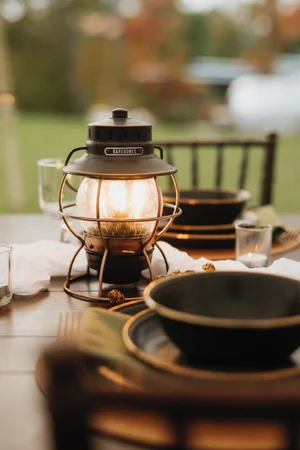
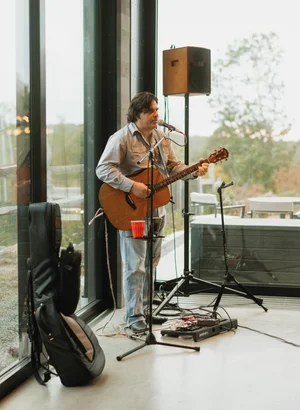
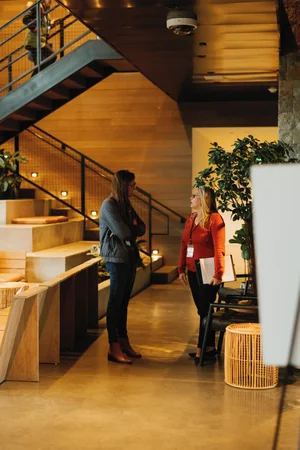
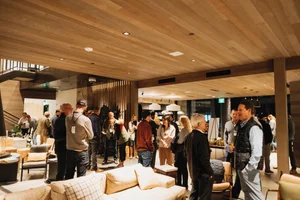
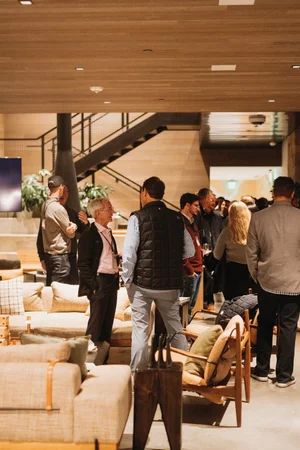
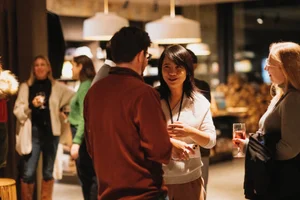
Whitman Peterson 2023 Annual General Meeting (Photos)
AGM – Day 1
AGM – Day 2
Scroll to Top